WISS is a real-time fatigue risk prediction system designed for high-risk operations such as mining, transportation, and industrial environments. Using a short voice recording (8–15 seconds), WISS identifies early signs of fatigue-related impairment and alerts both workers and supervisors before a potential incident occurs.
Unlike wearables or camera-based systems, WISS requires no additional hardware and can be deployed immediately across your workforce using mobile devices.
Why Companies Use WISS:
Reduce fatigue-related incidents and operational disruptions.
Improve compliance with safety and duty-of-care regulations.
Gain real-time visibility into workforce risk levels.
Act before a critical event occurs within the same shift
How it Works:
Workers complete quick voice check-ins during their shift. The system compares each recording against a continuously updated personal baseline to detect deviations associated with fatigue risk. When risk increases, supervisors are notified instantly, enabling timely intervention
Key Advantages:
Non-intrusive: No cameras, No wearables required
Fast: Results in seconds
Scalable: Works across sites, regions, and languages
Actionable: Real-time alerts and reporting dashboard
WISS is designed to integrate seamlessly into existing safety protocols, adding an additional predictive layer to your fatigue risk management strategy.
How WISS Technology predicts Fatigue Risk
WISS works by identifying subtle changes in voice patterns associated with fatigue and reduced alertness.
Each worker completes short voice check-ins during their shift (start, middle, end). The system compares each new recording against that individual’s historical voice patterns to detect deviations that may indicate increased fatigue risk
From day one, WISS begins generating risk indicators using a general baseline. As more data is collected, the system builds a personalized model for each worker, improving sensitivity to individual changes over time
What makes WISS different:
Focus on change detection, not generic thresholds.
Personalized models for each worker.
Continuous learning based on recent data.
Designed to detect risk within the same work shift.
The result is a practical, field-ready system that helps supervisors identify when a worker may be approaching a critical fatigue state—before it leads to an incident.
Simple Deployment and Daily Use
Set up WISS from a central dashboard. Organize your operation into sites and supervision groups, assign supervisors to the groups they oversee, and activate worker accounts.
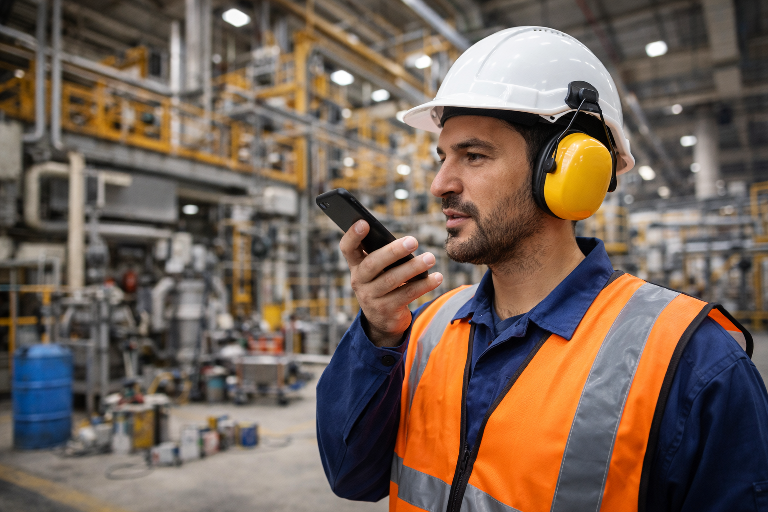
Once their accounts are active, workers can open WISS-APP from a compatible phone, workstation, or shared terminal. Teams can schedule voice check-ins around shift routines and planned breaks. The voice check-in requires no dedicated cameras or wearables.
Workers Experience:
Using WISS requires less than one minute per check-in:
Step 1: Open the web-app.
Step 2: Record a short voice sample (8-15 secons).
Step 3: Answer a few basic questions (once per day and also optional by configuration).
And that's it!.
What happens next:
The system analyzes the recording and data instantly.
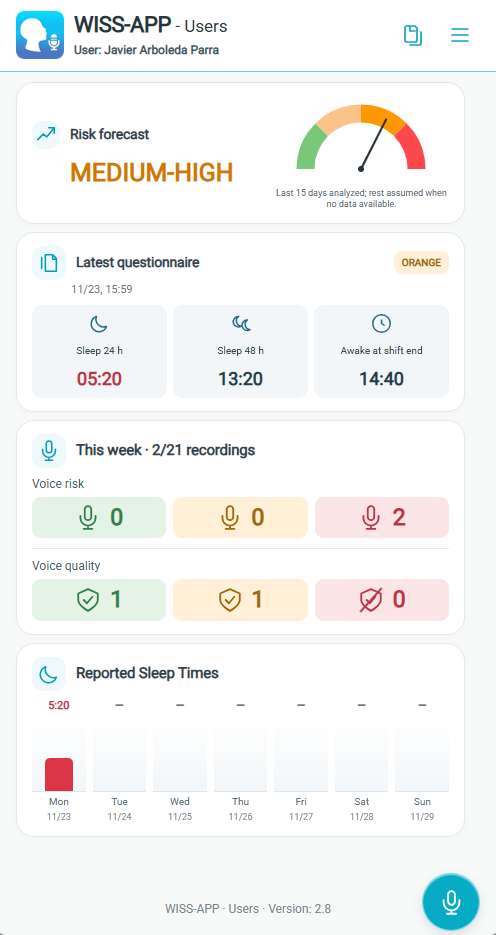
The worker receives a risk status.
If risk is elevated, supervisors are notified in real time.
For transport operations (optional):
Location data can be enabled to support operational decisions, such as identifying nearby rest points when a high-risk alert is triggered.
WISS is designed to fit naturally into existing workflows without disrupting operations.
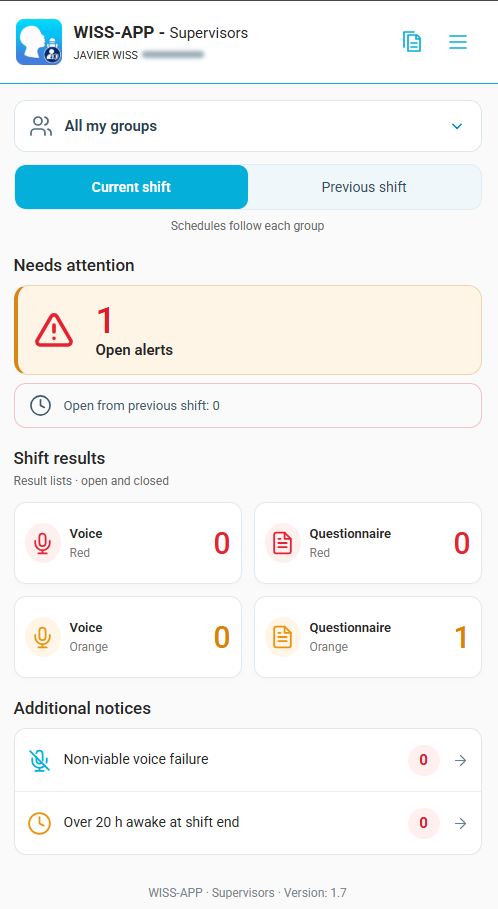
The WISS-APP for Supervisors gives field supervisors a mobile view of the groups they oversee and a way to record how they respond to fatigue alerts.
See what needs attention
Check open alerts, review current and previous shift results, and see voice and questionnaire results separately by severity.
Review the context
Open an alert to see the result that triggered it. For questionnaire alerts, review the sleep and shift information and the explanation of what contributed to the result.
Respond and document
Acknowledge the alert, follow the site’s fatigue management procedure, and record the action taken, such as speaking with the worker, arranging a break, or scheduling a follow-up.
Access is restricted to authorized supervisors. Initial setup requires a supervisor code and password.
WISS Dashboard
Monitor fatigue risk across sites, review trends and alert response, and follow up on recurring elevated results.
Available in English and Spanish.
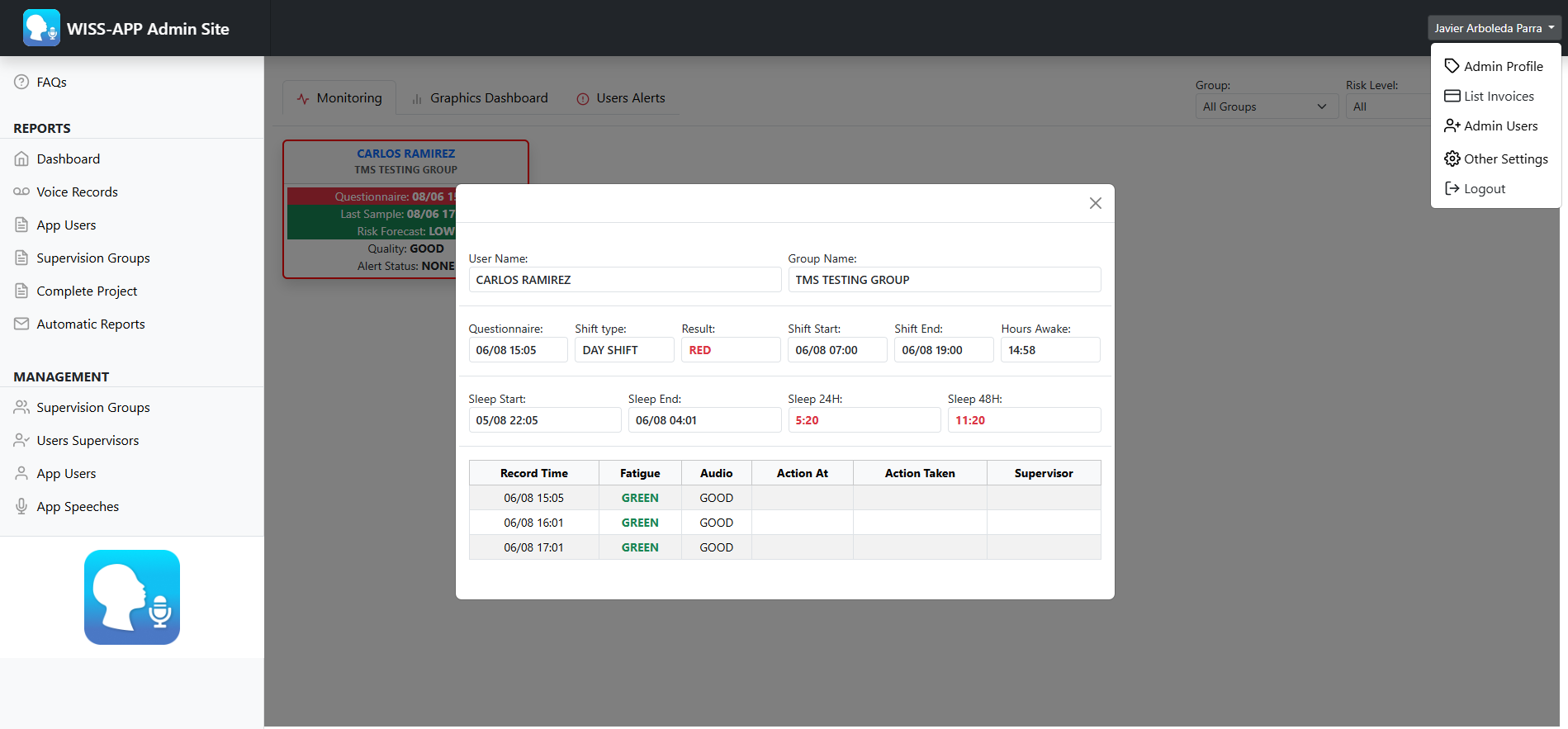
Filter by group and risk level to review recent voice and questionnaire results, risk forecasts, and alert status for workers in the current shift.
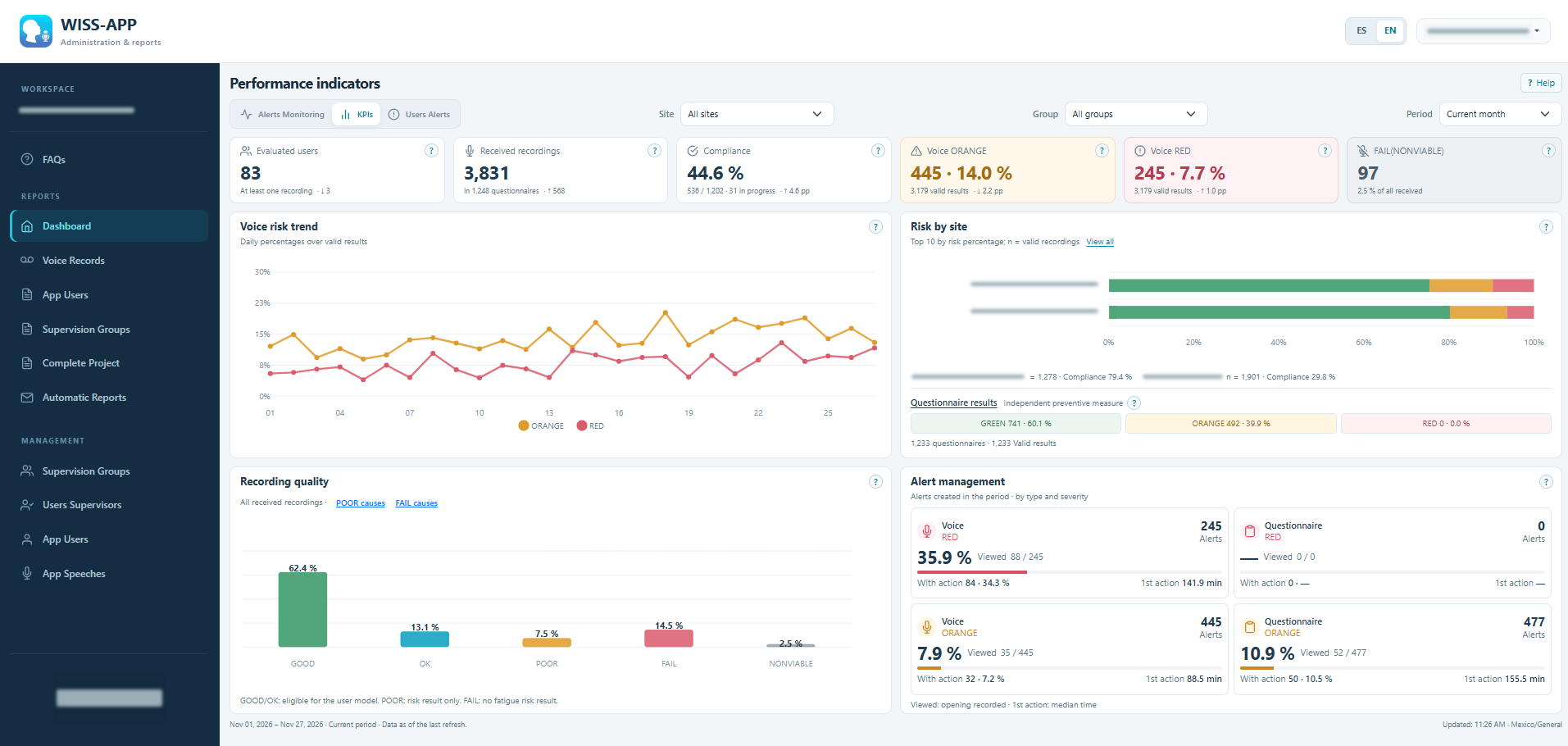
Track participation, recording quality, voice risk trends, and alert response. Filter the indicators by site, group, and period.
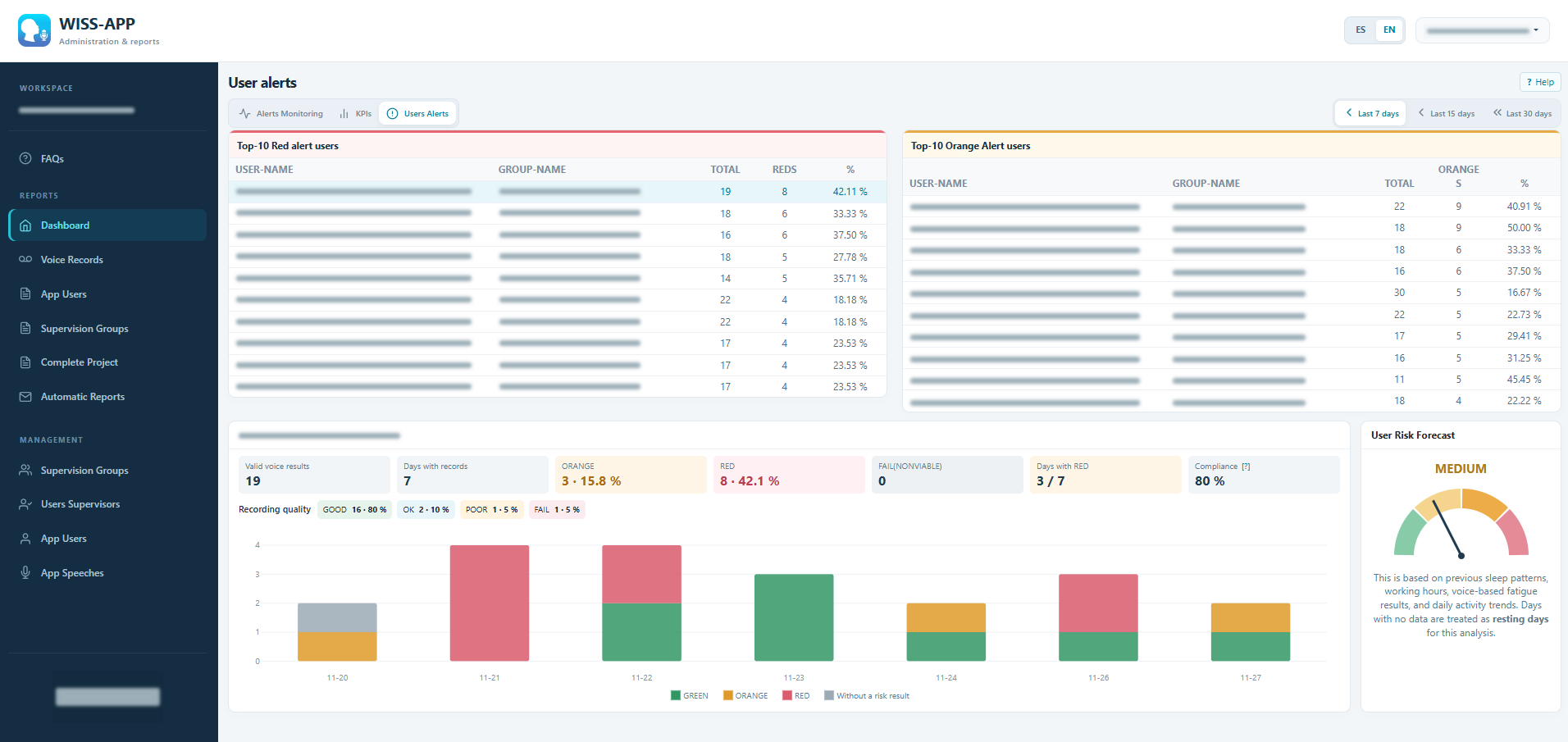
Review the top ten users by number of red or orange voice alerts over the last 7, 15, or 30 days. Open a user's history to see how their results have changed and review their current forecast.